
All ecolabels on (appliances + electronics)
Alphabetical index of 45 ecolabels.
A B C D E F G H I J K L M N O P Q R S T U V W X Y Z
|
B CorporationB Corporations are a new type of corporation which uses the power of business to solve social and environmental problems. B Corporations are unlike traditional responsible businesses because they meet comprehensive and transparent social and environmental performance standards, institutionalize stakeholder interests, and build collective voice through the power of a unifying brand. B Corporations' …
|
|
BASF Eco-EfficiencyBASF SE has developed a label for products that have been evaluated by an Eco-Efficiency Analysis. The awarding of the label is dependent on demanding requirements: After conclusion of the analysis a third party evaluation (peer review) is requested. Furthermore, publication of the results of the analysis will be undertaken via internet. The label can be carried on for three years. After …
|
|
Blue AngelThe Blue Angel was initiated by the German government and awarded by an independent Jury to products that are environmentally friendlier than others serving the same use. Each label specifies that the product or service focuses on one of four different protection goals: health, climate, water, and resources. The Blue Angel Standard is managed by four entities:
|

|
Carbon Neutral Product CertificationCarbon Neutral certification program requires an initial carbon audit in the form of a Life Cycle Analysis - a comprehensive carbon audit which calculates the CO2 emissions used in raw materials, fuel & electricity and waste used in the production and distribution of that product. |
|
Carbon Reduction LabelThe Carbon Reduction Label is a public commitment that the carbon footprint of a product or service has been measured and certified and the owner of the product or service has committed to reduce that footprint over the following two years. The footprint that has been calculated will have been rigorously measured and be comparable based on the PAS2050 standard and Footprint Expert™. This will …
|

|
CarbonCareThe CarbonCare® Labeling Scheme encourages and recognizes the efforts of organizations, entities and groups in tackling climate change in 3 steps we call MRO - Measuring, Reducing and Offsetting carbon footprints. Indicated by the number of leaves, labels of different levels of emissions reduction and/or offset against a defined base year will be awarded to the applying entity. For …
|
|
CarbonFree® CertifiedThe CarbonFree® Product Certification label is aimed at increasing awareness of product emissions and recognizing companies that are compensating for their carbon footprint. The label was created in response to the growing market for eco-friendly products and consumer demand for transparent, credible and readily accessible information at the point of purchase. By determining a product’s carbon …
|
|
China Environmental LabellingChina Environmental Label was initiated by SEPA in 1993. It provides environmental standards for construction materials, textiles, vehicles, cosmetics, electronics, packaging, and more. |
|
ClimatopThe aim of climatop is to label the most climate friendly products and services (best-in-class). Similar products of a product family (functional unit) are compared with respect to their environmental emissions. Products that cause CO2-eq emissions that are generally 20% lower, receive the label. Only products that have an environmental balance, which is at least equal or better than the one of …
|
|
Cradle to Cradle Certified(CM) Products ProgramThe Cradle to Cradle Certified(CM) Products Program provides a company with a means to demonstrate efforts in eco-intelligent design. Cradle to Cradle Certification is a third-party sustainability label that requires achievement across multiple attributes:
|
|
ENERGY STAR: CanadaThe ENERGY STAR logo identifies the most energy efficient equipment for a variety of types of products to guide consumers when they are making purchases. There is a certification logo and also a bilingual promotional logo. |
|
ENERGY STAR: New ZealandENERGY STAR is New Zealand's mark of energy efficiency. It is typically awarded to the top 25 percent most energy efficient appliances, home electronic products and office equipment in each category. It is used in conjunction with minimum energy performance standards and comparative labelling. |
|
ENERGY STAR: USAENERGY STAR is a voluntary government-backed program dedicated to helping individuals protect the environment through energy efficiency. The ENERGY STAR mark is the national symbol for energy efficiency, making it easy for consumers and businesses to identify high-quality, energy-efficient products, homes, and commercial and industrial buildings. ENERGY STAR distinguishes what is efficient/better …
|
|
EU EcolabelA voluntary scheme designed to encourage businesses to market products and services that are kinder to the environment and for European consumers - including public and private purchasers - to easily identify them. |
|
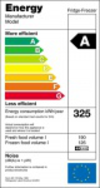
EU Energy LabelBy law, the European Community Energy Label must be displayed on all new household products displayed for sale, hire or hire-purchase. The Directive applies to the following types of household appliances, even where these are sold for non-household uses: refrigerators, freezers and their combinations; washing machines, dryers and their combinations; dishwashers;
ovens; water heaters and …
|

|
EarthsureThe purpose of the Earth sure program is to provide comprehensive environmental data to purchasers (business and individuals) so that the power of the market can moves the economy towards overall environmental improvement. Earth Sure environmental product declarations (EPDs) can cover a portion of the life cycle of a product or an entire life cycle. Products in any sector can obtain EPDs …
|
|
Eco-LeafThe eco-leaf is an environmental product declaration based on a life cycle analysis consisting of three parts:
|
|
EcoMark: JapanThe Eco Mark program serves to promote environment-friendly lifestyles (ecological lifestyles) through wise product choices. A committee composed of academics, governments, consumer groups, and experts from various industries sets standards and carries out the certification. The Eco Mark is awarded to products with relatively less environmental impact compared to similar products, during their entire …
|

|
Energy Saving Labeling Program: JapanAccording to the Energy Conservation Law, energy efficiency labeling of designated products is mandatory. The label has to contain the product name, model, energy consumption efficiency ratio and power/fuel consumption.
In this case the label does not require presentation of energy consumption performance parameters for product as a relative comparison with other products but an achievement …
|
|
Energy Saving RecommendedEnergy saving products use less energy and therefore have less of an environmental impact as well as being cheaper to run. The Energy Saving Recommended logo is a quick and easy way to spot the most energy efficient products on the market. |

|
Environmental Product DeclarationThe overall goal of an Environmental Product Declaration, EPD, is to provide relevant, verified and comparable information to meet various customer and market needs. The International EPD® System has the ambition to help and support organisations to communicate the environmental performance of their products (goods and services) in a credible and understandable way. |
|
GREENGUARDAcquired in 2011, GREENGUARD Certification is now provided by UL Environment, a divison of UL (Underwriters Laboratories). GREENGUARD Certification helps manufacturers create -- and helps buyers identify -- interior products and materials that have low chemical emissions into indoor air during product usage. All certified products must meet stringent emissions standards based on established chemical …
|
|
Good Environmental Choice Australia (GECA)Good Environmental Choice Australia (GECA) runs Australia's only independent, not-for-profit, multi-sector ecolabelling program and is the only Australian member of the Global Ecolabelling Network (GEN). This certification program develops standards against which products and services can be independently audited by JAS-ANZ accredited conformance assessment bodies (CABs). Standards are developed …
|
|
Good Shopping Guide Ethical AwardThe aim of the Ethical Company Organisation is to set an independent benchmark for corporate social responsibility. The Ethical Accreditation scheme enables companies and brands to display an independently-verified bill of health across the fields of people, animal welfare and the environment. |
|
Green Choice: PhillipinesHeaded by former First Lady Amelita Ramos, CGFI has been pro-actively advocating for environmentally-sound policies, practices, norms and behavior among all segments of Philippine society. |

|
Green MarkTo promote the concept of recycling, pollution reduction and resource conservation. |

|
Green Products StandardGreen Products Standard helps consumers better understand the growing number of green and eco-friendly products in the marketplace. Their standards take a comprehensive life-cycle view of every product and provide a ranking of degree of 'greenness' explained with a simple symbol and a report. |
|
Green TickIndependent sustainability certification of products, services, and corporations based on a life-cycle audit of performance against the Green Tick Sustainability Standards. GreenTick also certifies for Climate-Friendly, Natural, GE-Free, Organic, and Fair Trader brands. |
|
Hong Kong Green Label (HKGLS)The HKGLS is an independent, non-profit-making and voluntary scheme for the certification of environmentally preferable products launched in December 2000 by Green Council (GC). The scheme sets environmental standards and awards "Green Label" to products that are qualified regarding their environment performance. As with all eco-labelling programs, the aim is to encourage manufacturers …
|
|
Korean EcolabelThe Korea Eco-Products Institute carries out various operations related to improvement in eco-products and product environmental friendliness by setting up the eco-product standards, building an evaluation system, offering eco-products & environmental trend information to the public, facilitating production of eco-products, and constructing the eco-product consumption system. |
|
|
LowCO2 CertificationFor businesses operating in circumstances which deem carbon neutrality unrealistic, the option for Low CO2 certification is available. The organisation still undertakes a greenhouse gas audit; however it is focused only on the operational impacts of the business, rather than all related emissions. |
|
NSF Sustainability Certified ProductThe NSF Sustainability Certified mark is available to products that meet conformity assessment to a NSF/ANSI or other national or international sustainable product standards. Use of the NSF Sustainability Certified Mark is granted once certification has been completed through product evaluation, conformity assessment against standards and protocols, and production systems review. The …
|

|
Nordic Ecolabel or "Swan"Demonstrates that a product is a good environmental choice. The "Swan" symbol, as it is known in Nordic countries, is available for 65 product groups. The Swan checks that products fulfill certain criteria using methods such as samples from independent laboratories, certificates and control visits. Each Nordic country has local offices with the responsibility for criteria development, …
|
|
Phillips Green LogoPhilips products that have a Green logo offer customers, users and society an environmental improvement of at least 10% in one or more of the Philips Green Focal Areas:
|

|
SEE What You Are Buying IntoSEE What You Are Buying Into is a labelling scheme for businesses that are open and honest about their Social, Environmental and Ethical (SEE) policies and practices. To use the SEE Logo, a company completes the SEE Questionnaire, developed in collaboration with leading NGOs. Businesses guarantee the accuracy and veracity of their responses and publish them on the SEE What You Are Buying …
|
|
SIRIM CertifiedUnder SIRIM QAS International Eco-Labelling Scheme, a product will be independently tested and verified against preset criteria before the organisation is allowed to use SIRIM QAS International’s Eco-Labelling mark on its product, packaging and promotional materials. SIRIM QAS International’s Eco-Labelling mark is a marketing tool which will enable a company to position its product as …
|

|
SMaRT Consensus Sustainable Product StandardsSustainable Materials Rating Technology or SMaRT, is the consensus sustainable products standard and label for building products, fabric, apparel, textile & flooring, covering over 80% of the world’s products with environmental, social, & economic criteria. It is the result of 17 years of standardization with six national votes of consensus approvals involving thousands of professionals. SMaRT …
|
|
Singapore Green Label Scheme (SGLS)The Singapore Green Labeling Scheme (SGLS) aims to help the public identify environment-friendly products that meet certain eco-standards specified by the scheme and seeks to encourage the level of eco-consumerism in Singapore as well as to identify the growing demand for greener products in the market. The scheme hopes to encourage manufacturers to design and manufacture with the environment in …
|

|
Smart WaterMarkSmart Approved WaterMark is Australia's water saving labelling program for products and services which are helping to reduce water use. The Smart WaterMark label is licensed to be used on products which have been approved as water saving by an independent Technical Expert Panel. Criteria include:
|
|
SourcemapSourcemap.com supports sustainable decision-making through our platform for supply chain transparency, where producers share detailed information about their processes with their buyers and their buyers’ buyers, all the way to the end consumer. A Sourcemap ecolabel points to information on a product's components and their origins, as well as optional environmental and social footprints. The information …
|
|
TerraCycleTerraCycle runs national waste collection programs in 10 countries where non-recyclable post-consumer waste (used candy wrappers, tooth brushes, pens, juice pouches and many other categories of waste) is collected and made into new products and materials. The TerraCycle logo informs a consumer that the product or package is no longer waste, and can be collected and sent (postage paid) to TerraCycle. …
|
|
Thai Green LabelThe Green Label is an environmental certification awarded to specific products that are shown to have minimum detrimental impact on the environment, in comparison with other products serving the same function. The Thai Green Label Scheme applies to products and services, not including foods, drinks, and pharmaceuticals. The Thai Green Label Scheme was initiated by the Thailand Business …
|
|
UL Energy Efficiency VerifiedUL (Underwriters Laboratory) provides a service for the verification of products that meet the appropriate requirements for energy efficiency and which are also Listed or Recognized by UL. Through UL's Energy Efficiency Certification Program, manufacturers can show consumers, competitors, and regulators that their products are helping lower energy demand. Products must comply with the appropriate …
|
|
USDA Certified BioBasedUSDA BioBased is a federally administered and run label that is based on the BioPreferred program created by the 2002 US Farm Bill to increase the purchase and use of biobased products. The 2008 Farm Bill (Food Conservation and Energy Act of 2008) expanded the existing preferred purchasing program for federal sector and reauthorized the voluntary labeling program for the broad scale consumer marketing …
|
|
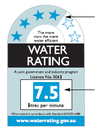
Water Efficiency Labelling & Standards (WELS) SchemeThe WELS water-rating label provides water efficiency information for water-using household products. The mandatory rating system is similar to the energy rating labelling, with six stars. By choosing to use more water-efficient products in the home, Australians will save water and cut down on water and energy bills. |



Ecolabel Index, the global directory of ecolabels, is brought to you by Big Room Inc..
We also operate .eco, a new web address for those committed to positive change for the planet. Get your own .eco domain name today.
© 2026 Big Room Inc. All rights reserved.