
All ecolabels in Australia certifying Products
Alphabetical index of 37 ecolabels.
A B C D E F G H I J K L M N O P Q R S T U V W X Y Z
|
Australian Certified OrganicACO provides certification services to operators from all sectors of the organic industry. Certification ensures compliance with national production standards and allows trace back of all products to their origin. |
|
BMP Certified CottonBMP is the Australian cotton industry’s guide for growing cotton in harmony with our natural environment. The Australian BMP Cotton trademark is a consumer guarantee that the branded textile product they are buying is made of Australian cotton grown under Best Management Practices by growers who care for our environment. |
|
Bio SuisseIndicates fully organic, produced in Switzerland. More than 90% of the raw materials come from Switzerland. |
|
Blue AngelThe Blue Angel was initiated by the German government and awarded by an independent Jury to products that are environmentally friendlier than others serving the same use. Each label specifies that the product or service focuses on one of four different protection goals: health, climate, water, and resources. The Blue Angel Standard is managed by four entities:
|

|
BonsucroBonsucro is a multi-stakeholder association established to reduce the environmental and social impacts of sugarcane, by designing a Standard and program to transform the sugarcane industry. Bonsucro certified sugarcane products, processes and services will soon be available for purchase. Bonsucro certified products and companies will be third-party verified by Bonsucro's Standard, which provides …
|
|
C.A.F.E. PracticesCoffee and Farmer Equity (C.A.F.E.) Practices evaluates, recognizes and rewards producers of high-quality sustainably grown coffee for Starbucks stores. C.A.F.E. Practices is a green coffee sourcing guideline with third-party evaluation. C.A.F.E. Practices seeks to ensure that Starbucks sources sustainably grown and processed coffee by evaluating the economic, social and environmental aspects of …
|

|
Carbon Neutral Product CertificationCarbon Neutral certification program requires an initial carbon audit in the form of a Life Cycle Analysis - a comprehensive carbon audit which calculates the CO2 emissions used in raw materials, fuel & electricity and waste used in the production and distribution of that product. |
|
Carbon Reduction LabelThe Carbon Reduction Label is a public commitment that the carbon footprint of a product or service has been measured and certified and the owner of the product or service has committed to reduce that footprint over the following two years. The footprint that has been calculated will have been rigorously measured and be comparable based on the PAS2050 standard and Footprint Expert™. This will …
|
|
CarbonFree® CertifiedThe CarbonFree® Product Certification label is aimed at increasing awareness of product emissions and recognizing companies that are compensating for their carbon footprint. The label was created in response to the growing market for eco-friendly products and consumer demand for transparent, credible and readily accessible information at the point of purchase. By determining a product’s carbon …
|
|
Compostability Mark of European BioplasticsEnables compostable products to be identified by a unique mark and channeled for recovery of their constituent materials in specially developed processes. The Compostability Mark thus conveys product information to waste-disposal plant operators and product image to consumers. |
|
Compostable: Biodegradable Products Institute LabelThe BPI's Compostable Logo identifies products that meet ASTM D6400 (for plastics) or ASTM D6868 (for fibre based applications) and will compost satisfactorily in large scale composting facilities. |

|
DIN-GeprüftCertification mark for Additives (e.g. printing inks, colours, adhaesives etc.) used for compostable products on basis of EN 13432 / ASTM 6400) also for compostable products e.g. packaging |
|
|
DeclareThe goal of Declare is to position the building product sector within a transparent materials economy. Declare is an ingredients label for building products, paired with an online database. It allows manufacturers to demonstrate their leadership in the marketplace and it provides consumers with honest information for product selection. All products are eligible for inclusion, regardless …
|
|
Dolphin Safe / Dolphin Friendly
The Earth Island Institute monitors tuna companies around the world to ensure the tuna is caught by methods that do not harm dolphins and protect the marine ecosystem. In order for tuna to be considered “Dolphin Safe”, it must meet the following standards:
1. No intentional chasing, netting or encirclement of dolphins during an entire tuna fishing trip;
2. No use of drift gill nets to catch …
|

|
EPEATEPEAT is a global rating system for greener electronics. Using EPEAT (“Electronic Product Environmental Assessment Tool”), purchasers in 43 countries can evaluate, compare and select electronics based on environmental attributes. EPEAT currently includes categories for PCs and Displays, Televisions, and Imaging Equipment (printers, copiers, scanners, multifunction devices, fax machines and mailing …
|
|
EU EcolabelA voluntary scheme designed to encourage businesses to market products and services that are kinder to the environment and for European consumers - including public and private purchasers - to easily identify them. |
|
FairtradeFairtrade is an ethical trade system that puts people first. Fairtrade offers farmers and workers in developing countries a better deal, and the opportunity to improve their lives and invest in their future. Fairtrade gives consumers the opportunity to help reduce poverty and instigate change through everyday shopping. When a product carries the FAIRTRADE Certification Mark, it means the …
|
|
Forest Stewardship Council (FSC) Chain of Custody CertificationThe Forest Stewardship Council® (FSC) promotes environmentally appropriate, socially beneficial, and economically viable management of the world's forests. FSC® chain of custody (CoC) tracks FSC certified material through the production process - from the forest to the consumer, including all successive stages of processing, transformation, manufacturing and distribution. Only FSC CoC …
|
|
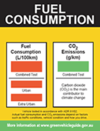
Fuel Consumption Label: AustraliaThe Fuel Consumption Label is an Australian Government initiative to promote consumer demand for vehicles with good fuel efficiency and lower greenhouse impact. All new vehicles up to 3.5 tonnes gross vehicle mass sold in Australia, regardless of fuel or body type, are required to have a Fuel Consumption Label on the front windscreen. This includes passenger cars, four wheel drives and light commercial …
|
|
GREENGUARDAcquired in 2011, GREENGUARD Certification is now provided by UL Environment, a divison of UL (Underwriters Laboratories). GREENGUARD Certification helps manufacturers create -- and helps buyers identify -- interior products and materials that have low chemical emissions into indoor air during product usage. All certified products must meet stringent emissions standards based on established chemical …
|
|
Global GreenTag CertifiedGlobal Green Tag® is a third party, green product rating and certification system, underpinned by scientific and Life Cycle Assessment (LCA) processes. The program assesses products against worst case business as usual products in the same functional category and with the same functional purpose, based on the following impacts / benefits:
|
|
Global Organic Textile StandardCOMPREHENSIVE RULES FOR ECOLOGICAL AND SOCIALLY RESPONSIBLE TEXTILE PRODUCTION The Global Organic Textile Standard (GOTS) was developed with the aim to unify the various existing standards and draft standards in the field of eco textile processing and to define world-wide recognised requirements that ensure organic status of textiles, from harvesting of the raw materials, through environmentally …
|
|
Good Environmental Choice Australia (GECA)Good Environmental Choice Australia (GECA) runs Australia's only independent, not-for-profit, multi-sector ecolabelling program and is the only Australian member of the Global Ecolabelling Network (GEN). This certification program develops standards against which products and services can be independently audited by JAS-ANZ accredited conformance assessment bodies (CABs). Standards are developed …
|
|
Green TickIndependent sustainability certification of products, services, and corporations based on a life-cycle audit of performance against the Green Tick Sustainability Standards. GreenTick also certifies for Climate-Friendly, Natural, GE-Free, Organic, and Fair Trader brands. |
|
ICMA EcoLabel Standard ProgramThe International Card Manufacturers Association (ICMA) EcoLabel Standard Program provides a determination of the environmental performance of a manufacturer’s transaction and identification cards through a third-party ecolabeling certification program. The current ICMA EcoLabel criteria include:
|
|
|
LowCO2 CertificationFor businesses operating in circumstances which deem carbon neutrality unrealistic, the option for Low CO2 certification is available. The organisation still undertakes a greenhouse gas audit; however it is focused only on the operational impacts of the business, rather than all related emissions. |
|
Natrue-LabelThe Natrue-Label is a guarantee for cosmetic products. Their goal is to promote and protect natural beauty and skin care products. Any product with the Natrue label is intended to be as natural as possible, using natural and organic ingredients, soft manufacturing processes and environmentally friendly practices. |
|
Programme for the Endorsement of Forest Certification (PEFC) schemesThe Programme for the Endorsement of Forest Certification (PEFC) is an international non-profit, non-governmental organization dedicated to promoting Sustainable Forest Management (SFM) through independent third-party certification. It works throughout the entire forest supply chain to promote good practice in the forest and to ensure that timber and non-timber forest products are produced with …
|

|
Rainforest Alliance CertifiedThe Rainforest Alliance Certified™ seal ensures that a product comes from a farm or forest operation that meets comprehensive standards that protect the environment and promote the rights and well-being of workers, their families and communities. Products that carry the green frog seal include coffee, tea, chocolate, fruit, ready to drink beverages and juices, flowers, paper and tissue products, …
|
|
RecognisedThe Recognised® eco-label identifies environmentally preferable commercial cleaning products. Recognised® products have undergone independent third-party scientific assessment against a multiple-criteria Standard. Recognised® covers, but is not limited to, the following products for use in commercial applications: hard surface cleaning products including general purpose cleaners, …
|

|
SMaRT Consensus Sustainable Product StandardsSustainable Materials Rating Technology or SMaRT, is the consensus sustainable products standard and label for building products, fabric, apparel, textile & flooring, covering over 80% of the world’s products with environmental, social, & economic criteria. It is the result of 17 years of standardization with six national votes of consensus approvals involving thousands of professionals. SMaRT …
|
|
Singapore Green Label Scheme (SGLS)The Singapore Green Labeling Scheme (SGLS) aims to help the public identify environment-friendly products that meet certain eco-standards specified by the scheme and seeks to encourage the level of eco-consumerism in Singapore as well as to identify the growing demand for greener products in the market. The scheme hopes to encourage manufacturers to design and manufacture with the environment in …
|

|
Smart WaterMarkSmart Approved WaterMark is Australia's water saving labelling program for products and services which are helping to reduce water use. The Smart WaterMark label is licensed to be used on products which have been approved as water saving by an independent Technical Expert Panel. Criteria include:
|
|
TCO CertifiedTCO Certified is an international sustainability certification for IT products and includes a wide range of criteria ensuring that the manufacturing, use and recycling of IT products is carried out with regard to environmental and social responsibility. TCO Certified combines requirements for social responsibility at the facilities where the product is manufactured, user safety and ergonomic …
|
|
U.S. EPA Safer ChoiceThe U.S. EPA Safer Choice program (previously U.S. EPA Design for the Environment Program) advances EPA's mission to protect human health and the environment. The program uses EPA's chemical knowledge and resources to carefully evaluate products and to label only those that have met the program's leadership standard. By allowing use of the logo on products, EPA empowers consumers and commercial …
|
|
WQA Sustainability MarkThe WQA Sustainability Mark is awarded to those drinking water treatment products which have been WQA certified in accordance with "WQA S-803: Sustainable Drinking Water Treatment Systems,” as a service to the industry and consumers. This certification means that production of the listed drinking water treatment systems has been audited and evaluated by the Water Quality Association, …
|
|
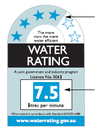
Water Efficiency Labelling & Standards (WELS) SchemeThe WELS water-rating label provides water efficiency information for water-using household products. The mandatory rating system is similar to the energy rating labelling, with six stars. By choosing to use more water-efficient products in the home, Australians will save water and cut down on water and energy bills. |



Ecolabel Index, the global directory of ecolabels, is brought to you by Big Room Inc..
We also operate .eco, a new web address for those committed to positive change for the planet. Get your own .eco domain name today.
© 2026 Big Room Inc. All rights reserved.